BARRIO MERCADO CUIDADOR / Zarita Gianni Polo Roncal
Project: Residential Architecture
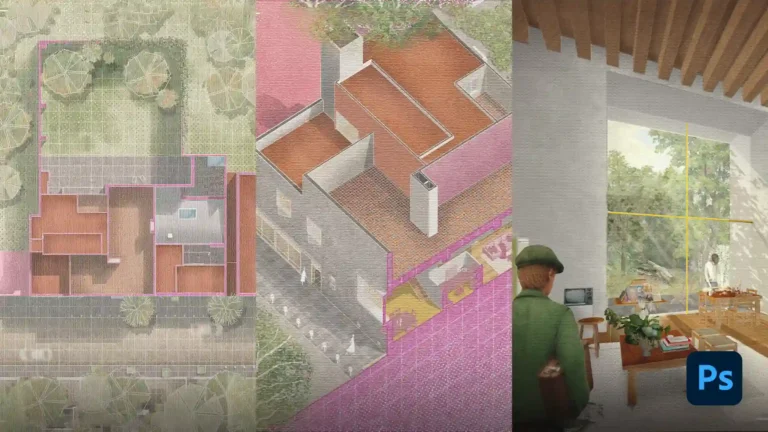
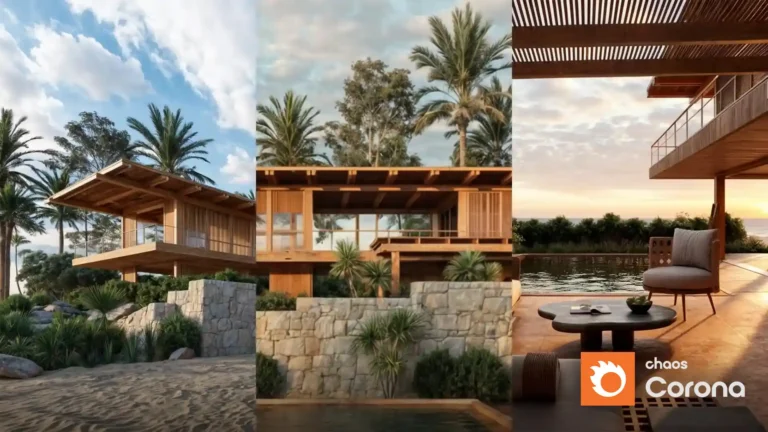
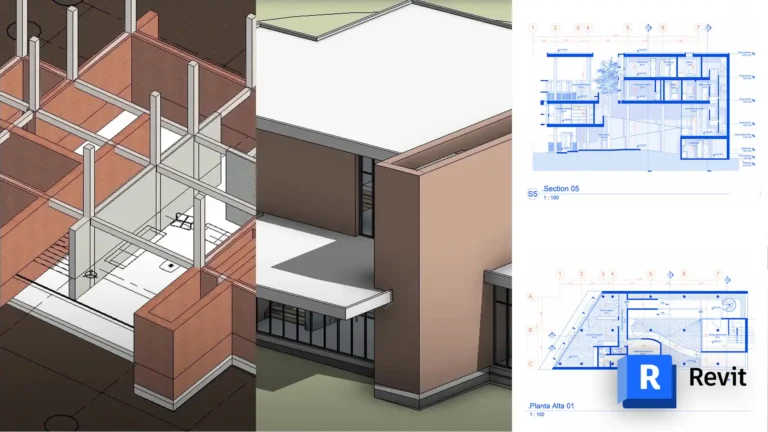
Software: Revit, Photoshop, Illustrator.
Markets are essential urban infrastructures in the social and economic life of Lima; beyond their commercial function, they serve as hubs for community gatherings and neighborhood organization. However, their single-purpose nature limits their use, turning them into unsafe and empty spaces at night. This problem is exacerbated in a highly seismic city where nearly 70% of the buildings are self-built, leading to issues of accessibility, slumification, and poor livability.
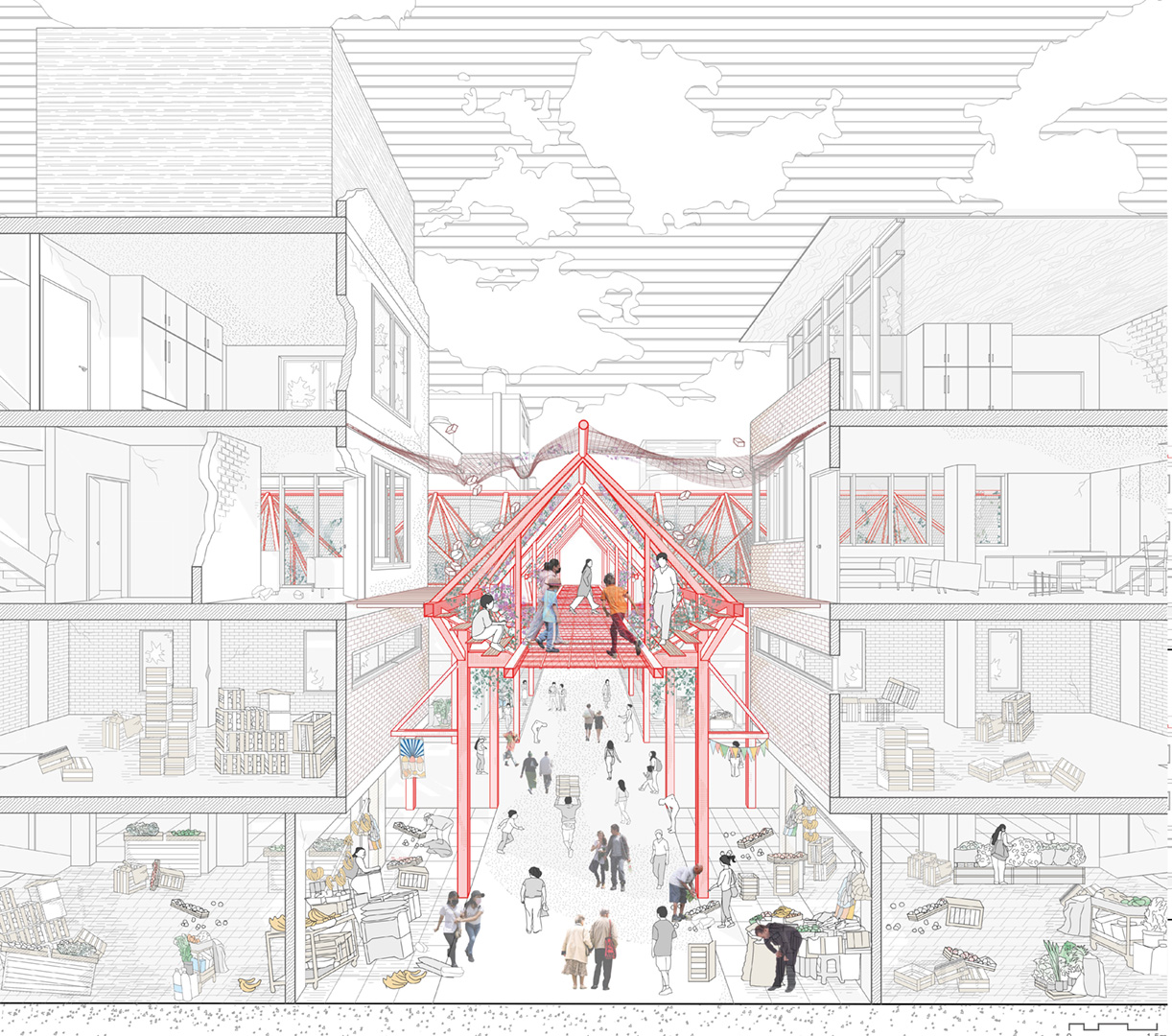
The Lima Norte Farmers’ Market is a microcosm of the self-built city; it draws a daily crowd of around 2,000 people and houses a neighborhood of 800 self-built homes within its grounds. This environment reveals critical problems: precarious living conditions and accessibility, structural vulnerability to earthquakes, disorderly overlapping of uses, and a shortage of care spaces. This is exacerbated by the fact that 83% of its population consists of children and women, who bear a large share of caregiving responsibilities and face daily risks.
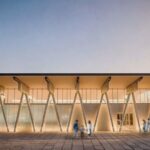
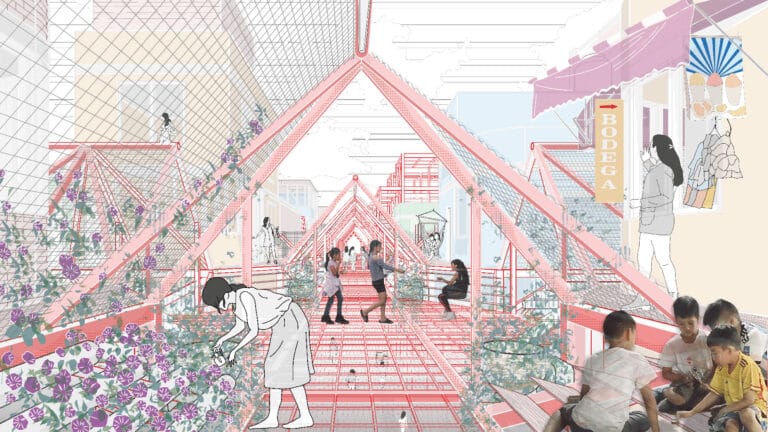
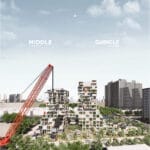
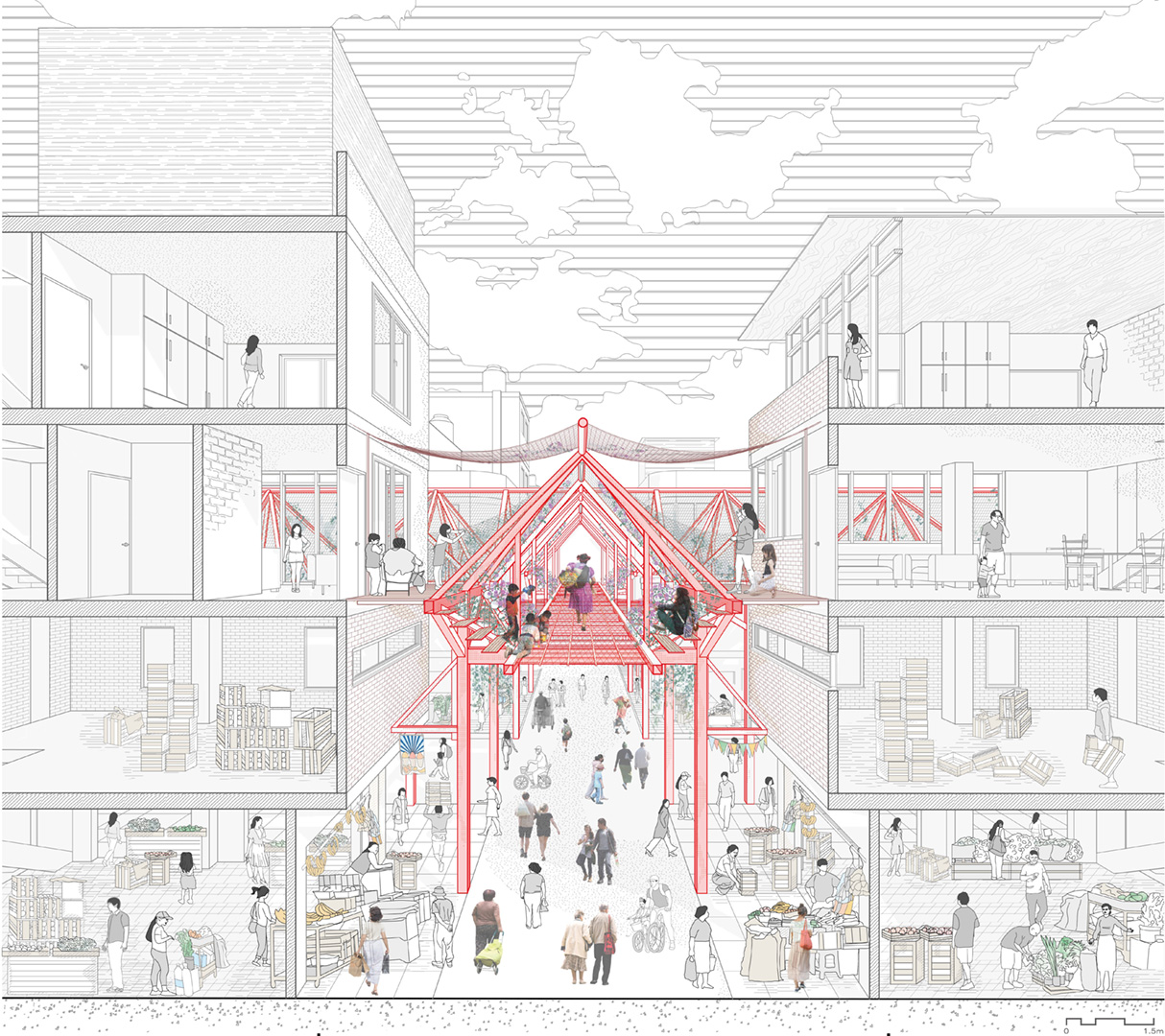
In response to this scenario, the “Barrio Mercado Cuidador” proposal views self-construction not as a problem to be eradicated, but as an opportunity to reconfigure the commercial-residential space from a new perspective focused on those who care for others and those who are cared for, thereby strengthening social cohesion and collective resilience.
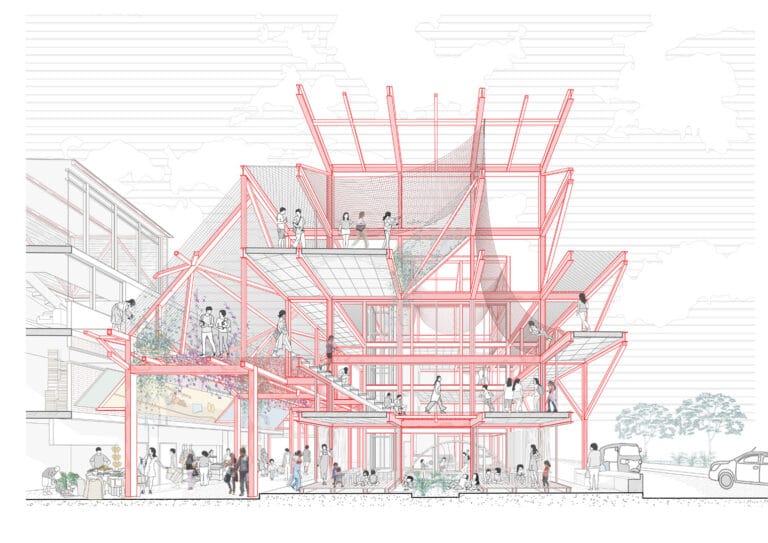
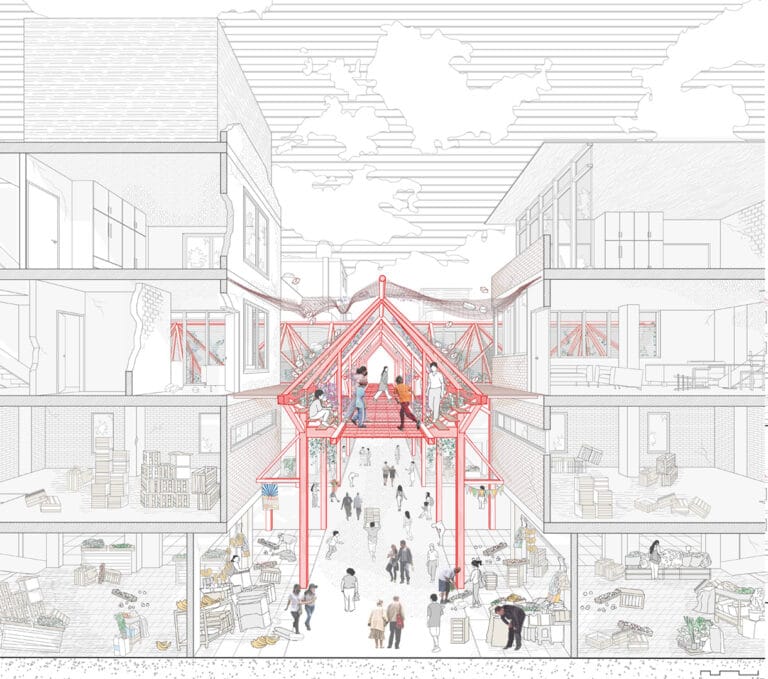
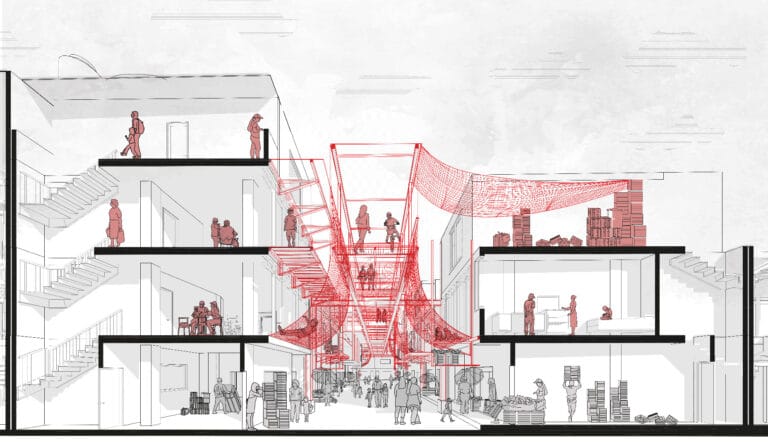
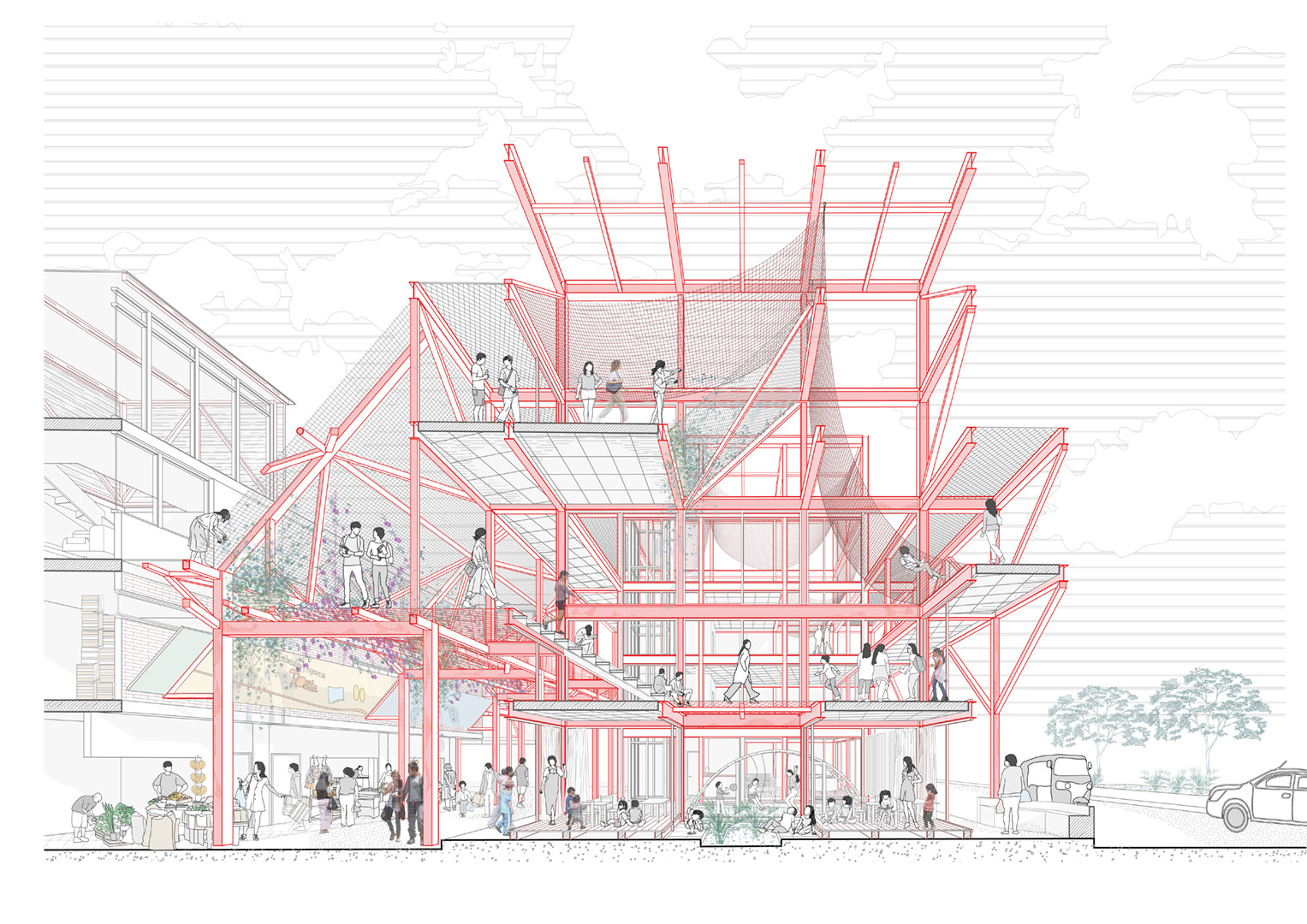
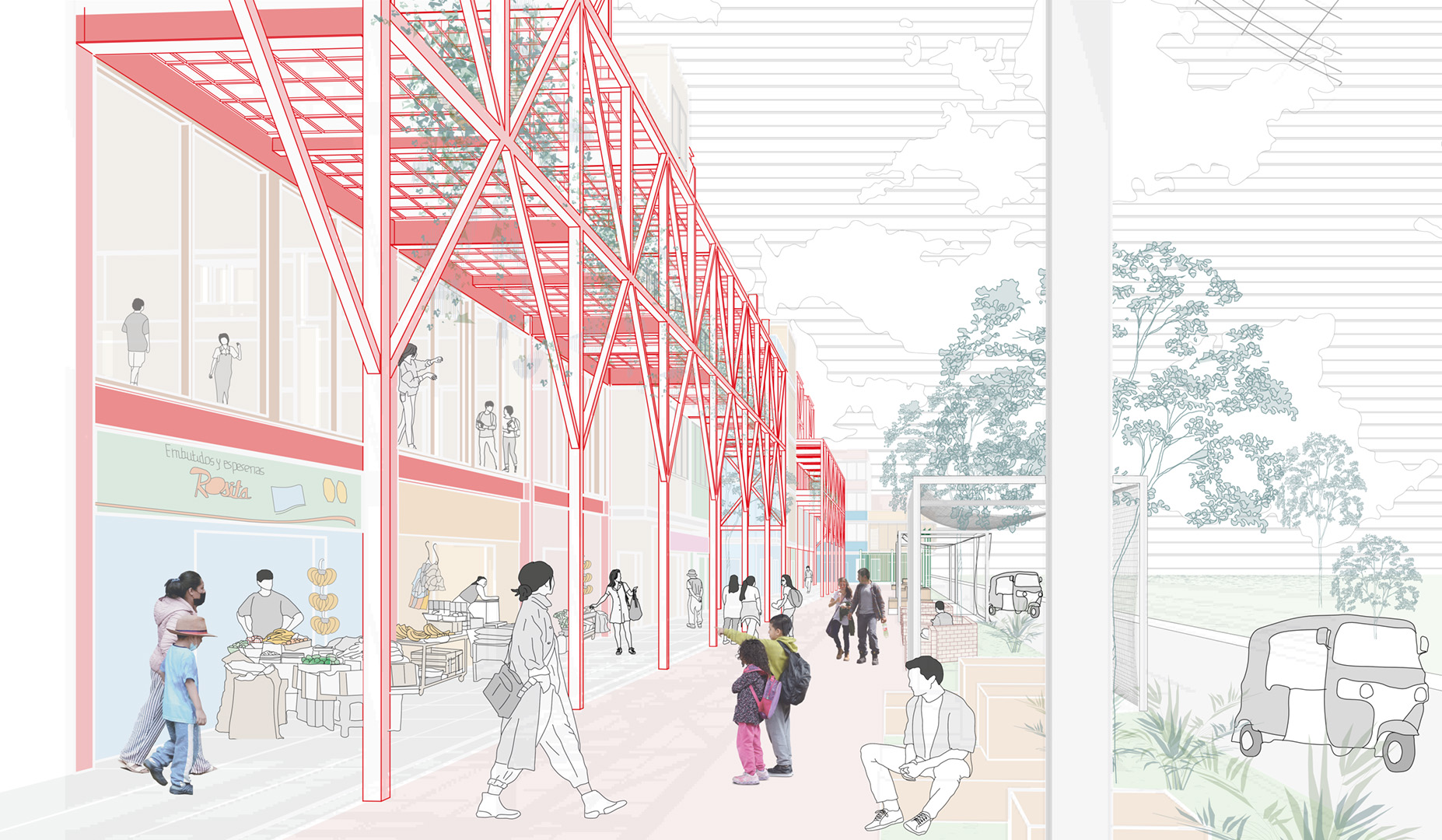
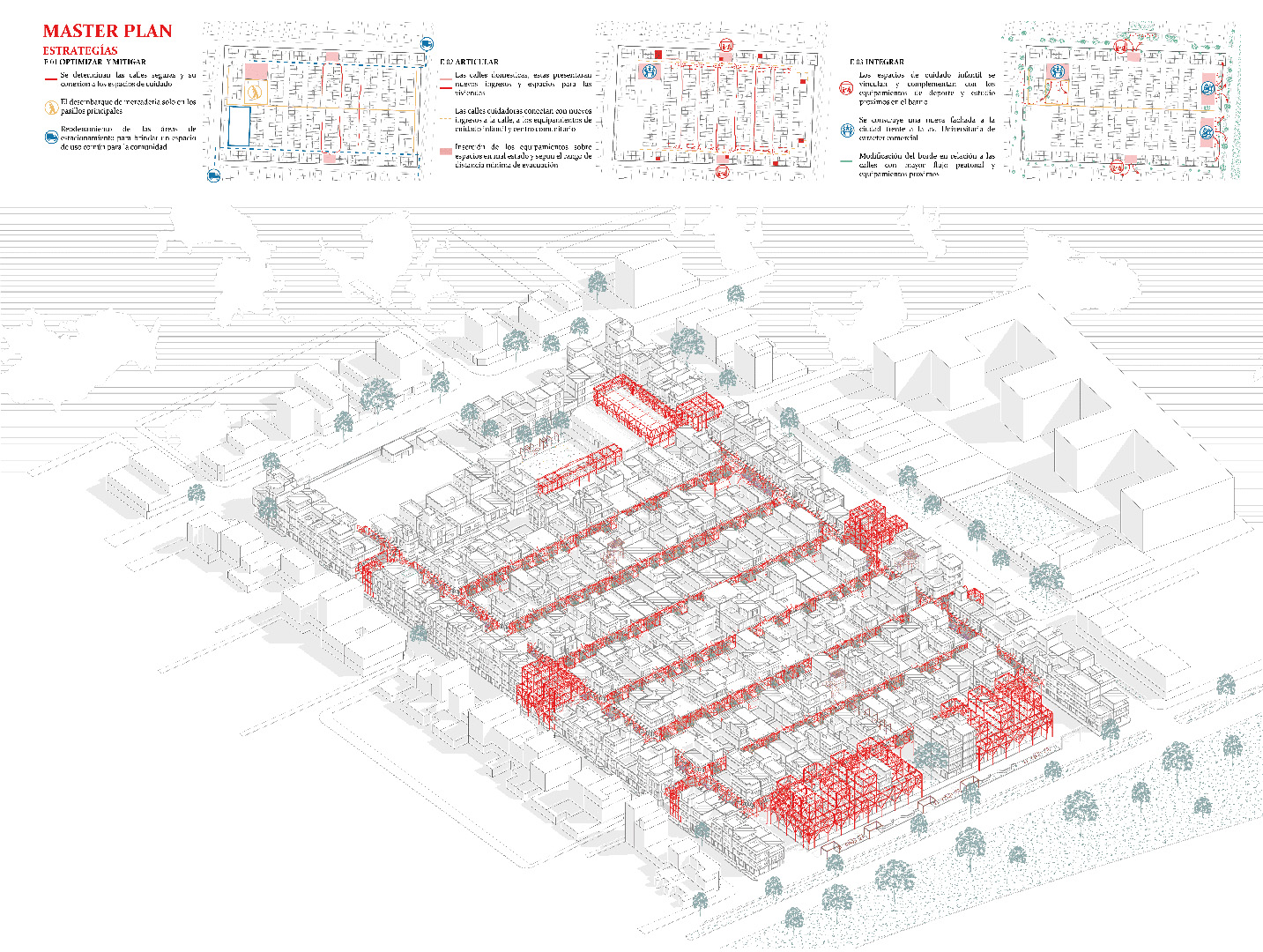
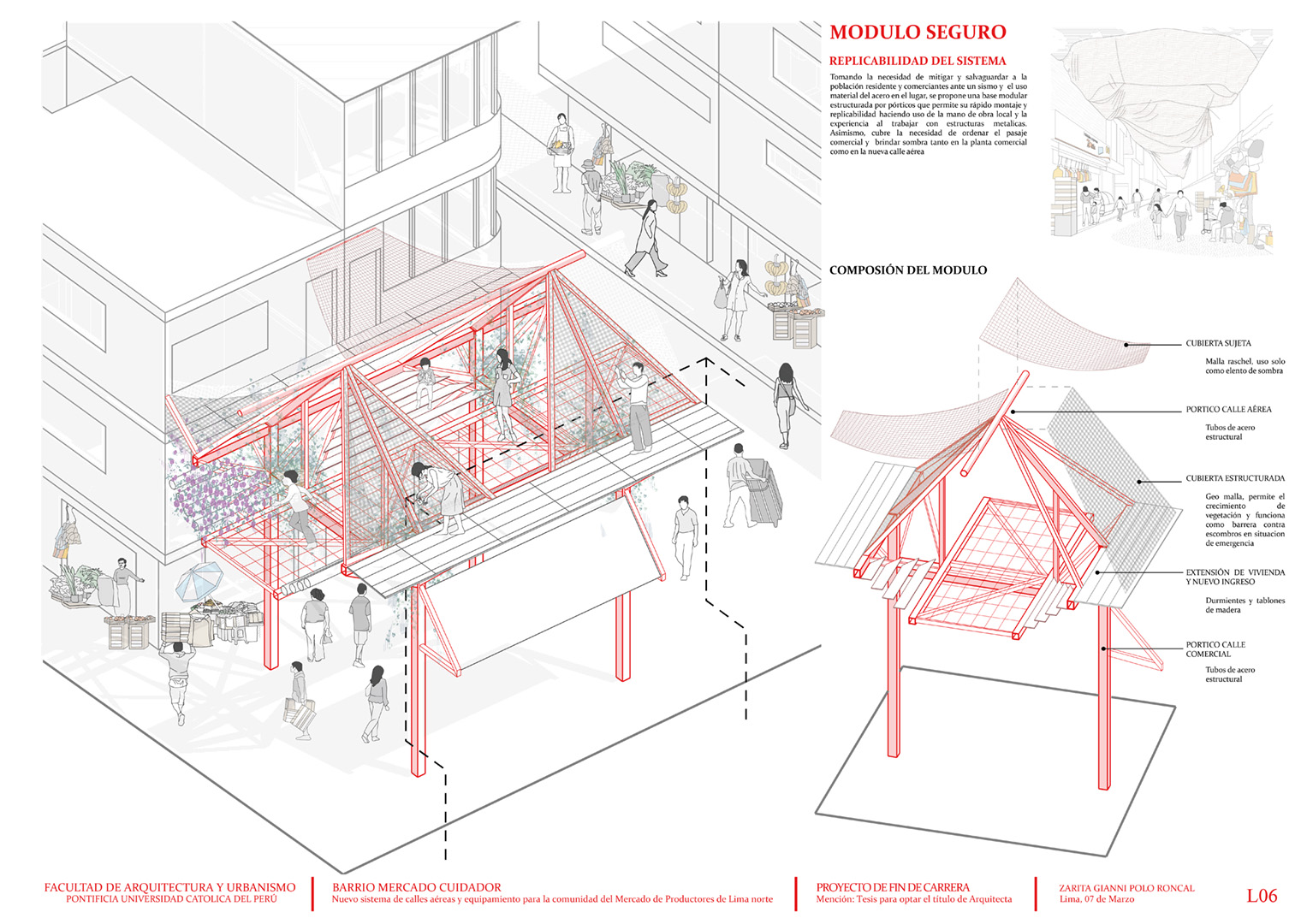
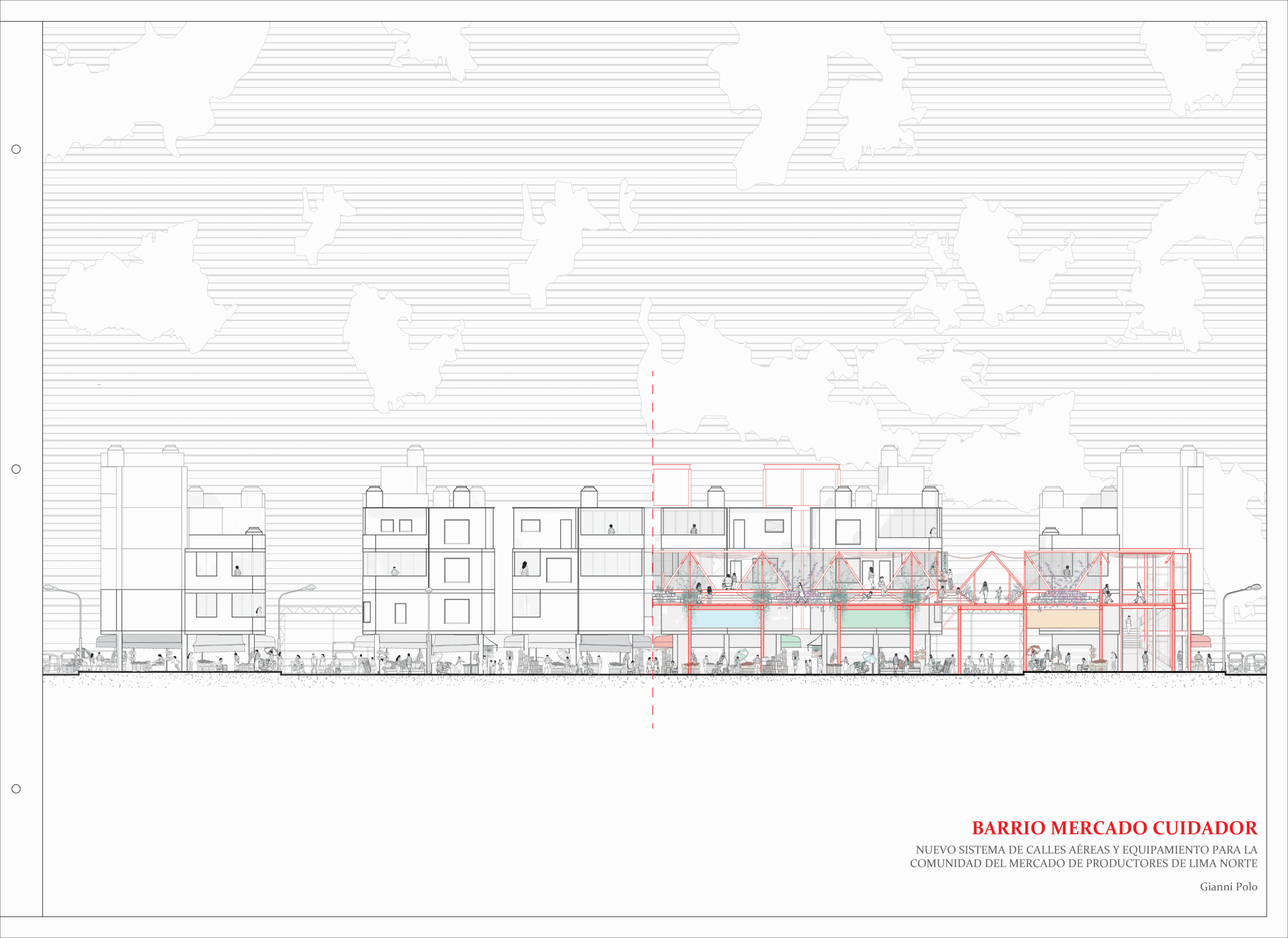
The approach begins with a participatory process involving mothers, children, market authorities, and local hardware store owners and builders. Areas where sales, residential, recreational, and care activities converge most heavily were identified; paradoxically, these areas concentrate the highest level of risk and threaten the physical safety of various users. This is where the first type of “care modules” is located, and their replicability will form the basis of the new system of safe elevated walkways. The second modular typology is an exostructure that reinforces buildings at higher risk of collapse due to seismic activity; this allows for the completion of the urban profile, enabling the integration of spaces dedicated to childcare, educational support, cultural activities, training workshops, and community services. These new hubs, in addition to fostering social interaction and strengthening community bonds, reinforce the role of local mothers and caregivers, generating development opportunities and additional income for the community.
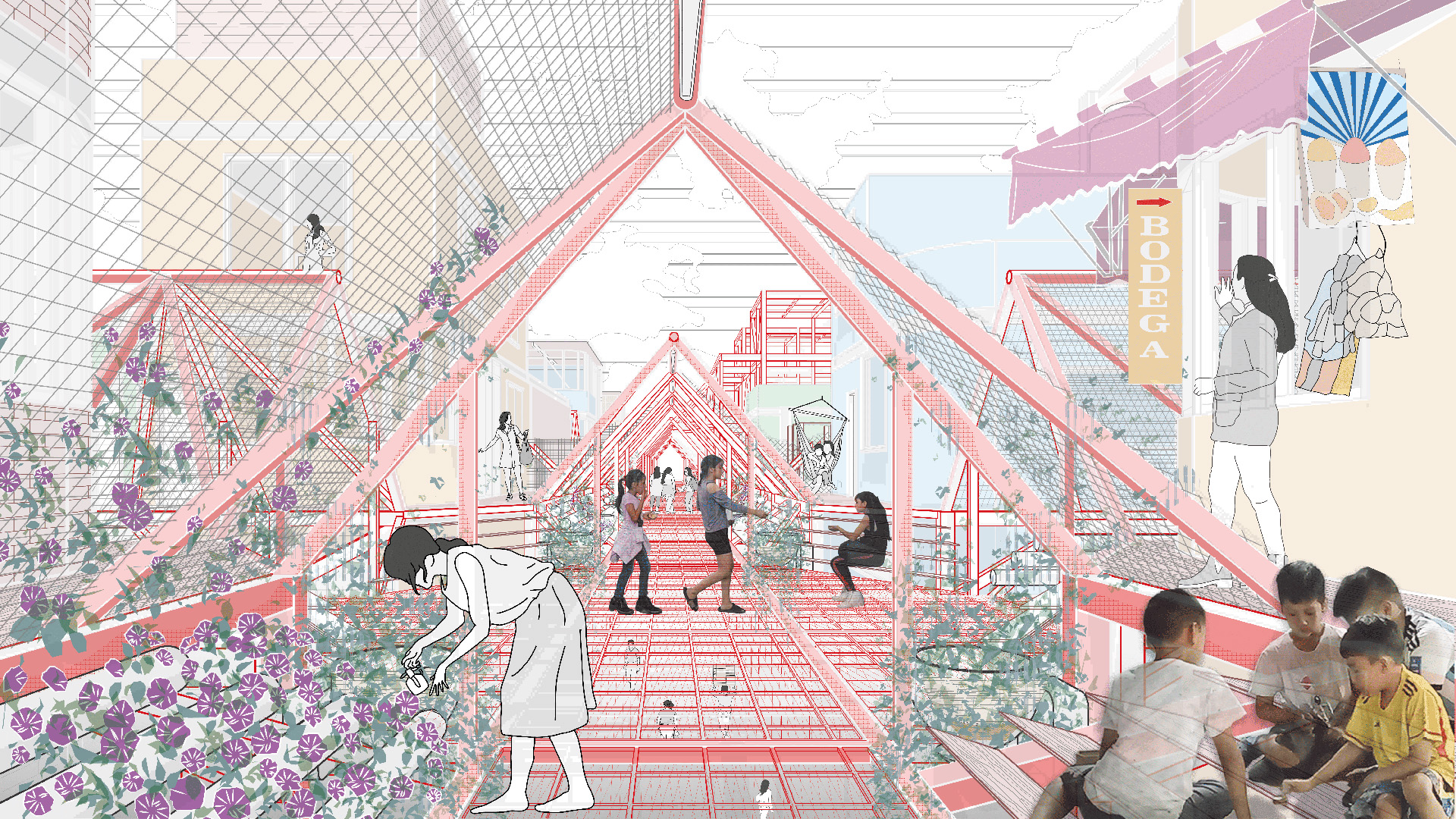
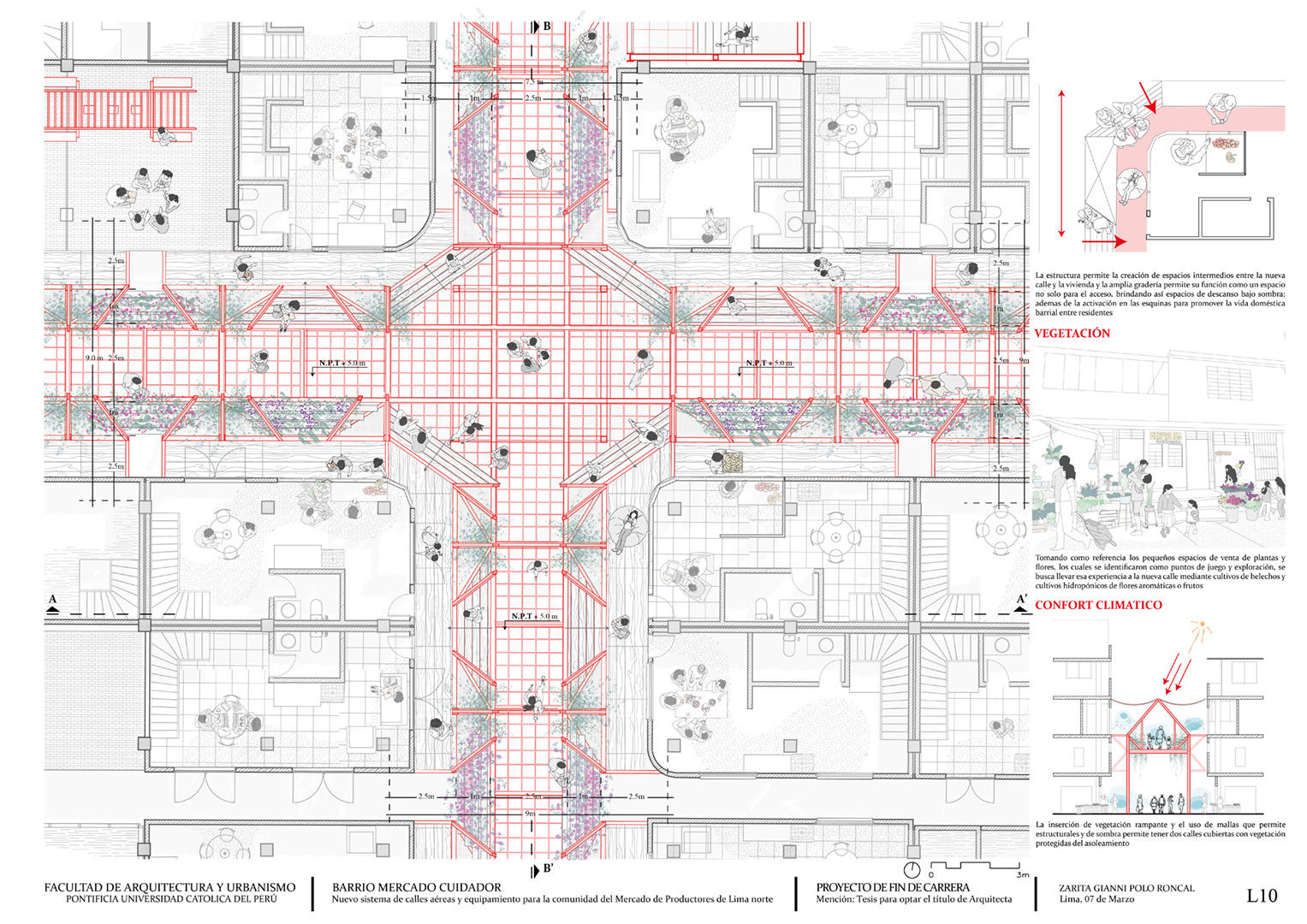
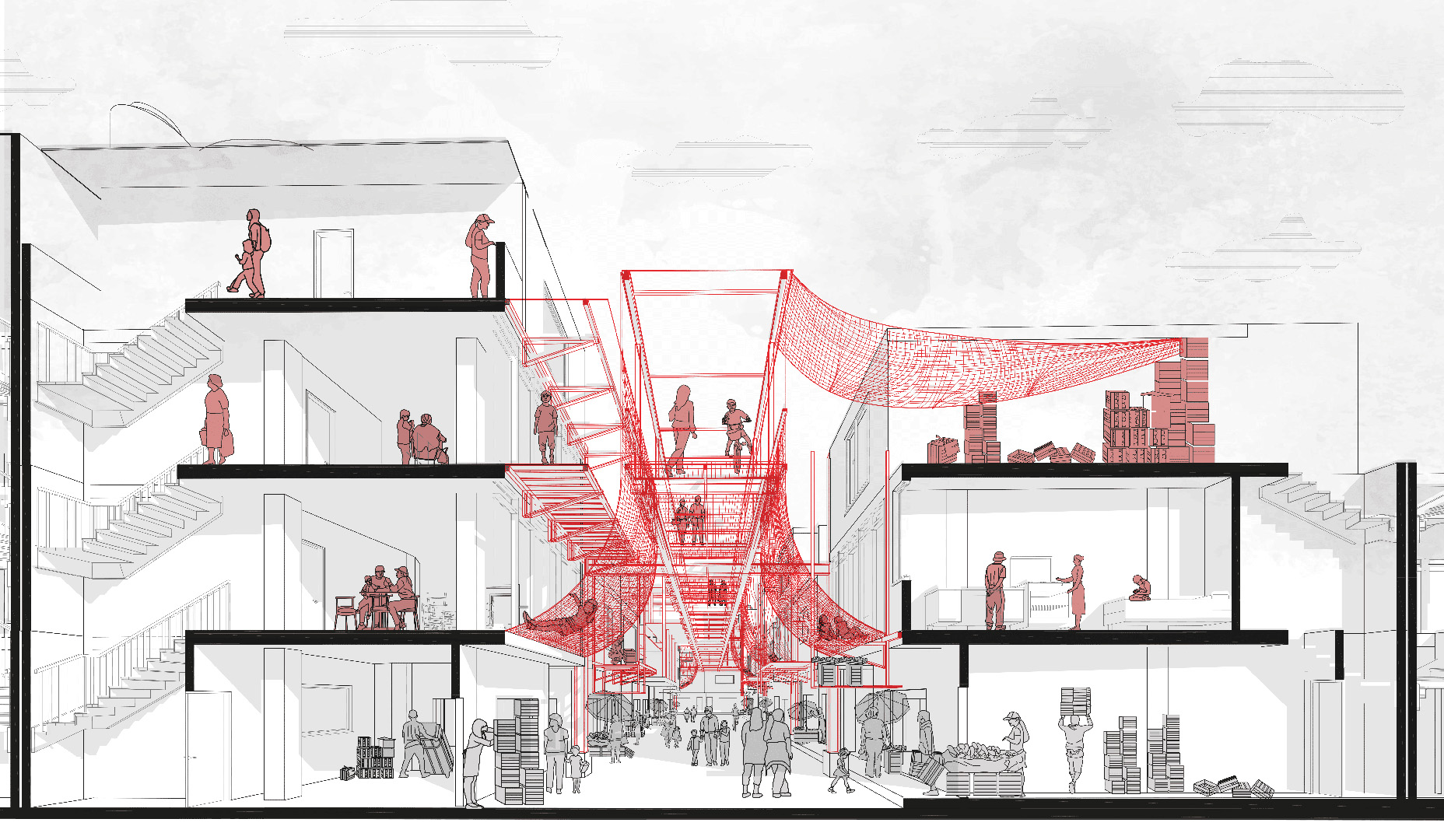
Safe aerial streets will adapt to the needs of residents and the diverse conditions of the buildings, providing new entrances to homes, creating intermediate spaces and active street corners that foster domestic life; furthermore, they will connect with community hubs, ensuring urban continuity between the neighborhood and the surrounding area. The construction process draws on local knowledge, incorporating the labor of master ironworkers and builders, and transmitting practices of resilience rooted in neighborhood self-management.
The implementation of this adaptive system highlights the existing conditions, not from a perspective of precariousness, but rather as an opportunity, transforming this self-built environment without displacing its inhabitants or disrupting commercial activity. It recognizes the social and cultural value of the existing fabric while integrating technical-constructive safety and care provisions. A replicable model capable of generating a new way of inhabiting the self-built city.